
Back in 2002, Ayurveda was barely on the map in the beauty industry.
Vivek Sahni saw this as a massive opportunity and jumped right in with Kama Ayurveda.
Kama Ayurveda was among the first brands to champion authentic, classical Ayurvedic formulations in a market dominated by chemical-laden skincare.
Fast forward to today, it’s a ₹150+ Cr luxury brand with 59 standalone stores, and a thriving omnichannel presence.
While digital-first brands like Mamaearth and Just Herbs scaled aggressively online, Kama Ayurveda has bet big on premium offline retail, international expansion, and an experience-led model.
So why has the brand resisted the D2C wave that’s taken over beauty and personal care? And does skipping an all-in e-commerce approach actually make sense?
Let’s break down Kama Ayurveda’s contrarian strategy—and why it’s working.
Kama Ayurveda: The Offline Bet That Has Been Paying Off For A Decade Now
While new-age skincare brands chase high-volume, low-margin digital sales, Kama Ayurveda built itself as an aspirational Ayurvedic experience—one that thrives inside premium retail stores, not just shopping carts.
It all started in 2012, when Kama Ayurveda launched its first flagship store in Delhi’s Khan Market.
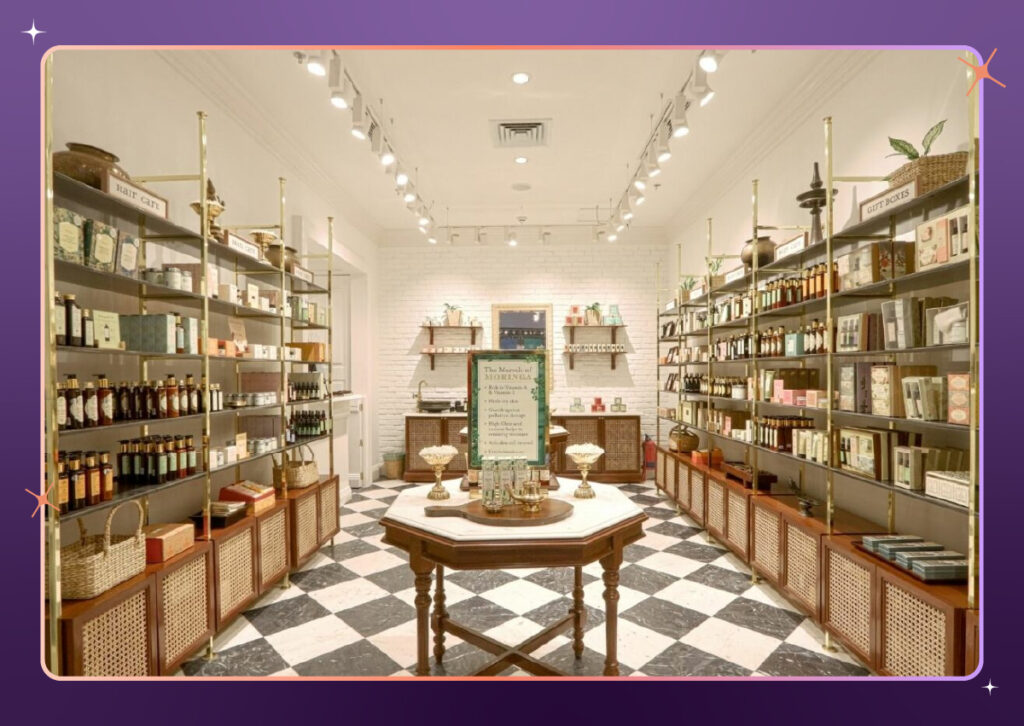
With offline stores, Kama Ayurveda was able to 👇
🛍 Create an immersive retail experience
From the warm aroma of essential oils to expert-led beauty consultations, walking into a Kama Ayurveda store had to feel like stepping into a sanctuary of ancient wellness.
👩⚕️ Train in-store beauty advisors
Unlike mass-market brands, Kama Ayurveda invested in specialists who provided personalized Ayurvedic consultations—something no website chatbot could replicate.
💎 Redefine Ayurveda as a luxury
Instead of the usual ‘earthy’ Ayurveda aesthetic, Kama Ayurveda infused premium packaging, minimal branding, and a polished store design—positioning itself as the Forest Essentials of mass premium Ayurveda.
This offline-first strategy proved to be a goldmine:
📈 70% of customers keep coming back for hero SKUs like Kumkumadi Oil & Bringadi Hair Oil
📈 Customers don’t just buy products—they buy into the experience
📈 Offline = deeper trust: Kama Ayurveda has already expanded to 22 Tier II & III cities, capturing markets where digital beauty brands struggle with credibility
Instead of deep discounting on D2C channels, the brand leveraged its premium offline presence to establish Ayurveda as a luxury, not just a trend.
Why Kama Ayurveda Won’t Jump On The Pureplay D2C Bandwagon
When COVID-19 forced Kama Ayurveda to pause its offline operations, the brand had to go digital overnight.
🚀 It ramped up its website, social commerce, and digital consultations
🚀 It partnered with Blinkit for Q-commerce delivery
🚀 It expanded its presence on Nykaa, Amazon & Myntra
And it worked—Kama Ayurveda’s e-commerce revenue surged 1.7X.
But even with solid online traction, the brand refuses to pivot entirely to D2C.
Here’s why:
1️⃣ Ayurveda Needs High-Touch Selling
Unlike mainstream skincare, Ayurveda isn’t a ‘see-and-buy’ category. It requires education, consultation, and personalized recommendations—things that in-store experiences deliver better than digital ads.
2️⃣ Luxury Beauty is Built on In-Store Experience
For premium beauty brands, retail isn’t just a distribution channel—it’s a branding tool. Walking into a Kama Ayurveda store builds trust, credibility, and sensory association, something a website can’t replicate.
3️⃣ Pureplay D2C = Price Wars, Not Exclusivity
D2C-first brands often rely on deep discounts and performance marketing to drive growth. Kama Ayurveda avoids price dilution, keeping its premium positioning intact across all channels.
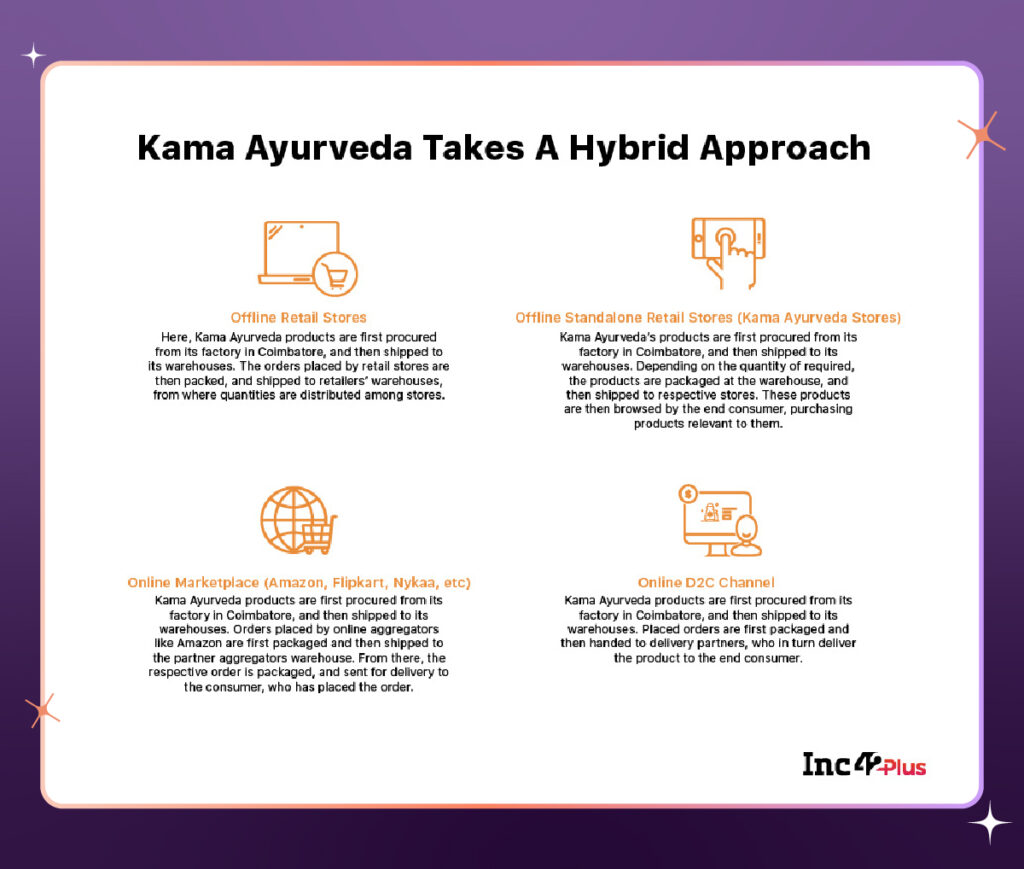
“Our model of partnering with online aggregators, stores, and standalone outlets helps us cater to a larger audience while maintaining authenticity,” said Vivek.
Instead of chasing high-spend customer acquisition on D2C, Kama Ayurveda is scaling smartly through an omnichannel strategy.

The Puig – Kama Ayurveda Marriage
In 2019, Spanish luxury giant Puig (owners of Charlotte Tilbury & Paco Rabanne) acquired a stake in Kama Ayurveda.
This wasn’t just another investment. It was a signal that Kama Ayurveda was ready to go global.
🌍 First stop: The UK
📍 D2C website launched, flagship store opening soon
🛍 Luxury retail partnerships on the horizon
With Puig’s global retail expertise, Kama Ayurveda isn’t just another beauty brand anymore—it’s building the Ayurveda equivalent of a premium French skincare house.
Kama’s Karma?
Kama Ayurveda’s roadmap is very different from digital-first disruptors like Pilgrim or Juicy Chemistry.
Instead of blitzscaling online, it’s scaling thoughtfully:
💡 More physical stores in Tier II & III cities + flagship stores in global markets
💡 Hyperlocal delivery networks fulfilling 90% orders in under 2 days
💡 Slow beauty + sustainability = perfect fit for younger, conscious consumers
The long-term play?
Not just to be another Ayurveda brand, but to become THE Ayurveda brand worldwide.
For mass-market beauty brands, D2C is critical.
For premium Ayurvedic brands like Kama Ayurveda, in-store experience is the real moat.
🚀 Not all beauty brands need to be pureplay D2C to scale. Kama Ayurveda is proving that offline-first brands can still win big.






.svg)
.svg)


